A bamboo comforter has two main material layers: the fabric shell on the outside and the insulating fill sewn inside it. Either layer can contain viscose made from bamboo, and the percentages do not have to match.
That distinction explains why two white comforters with “bamboo” in their names can have very different loft, warmth, weight and care instructions.
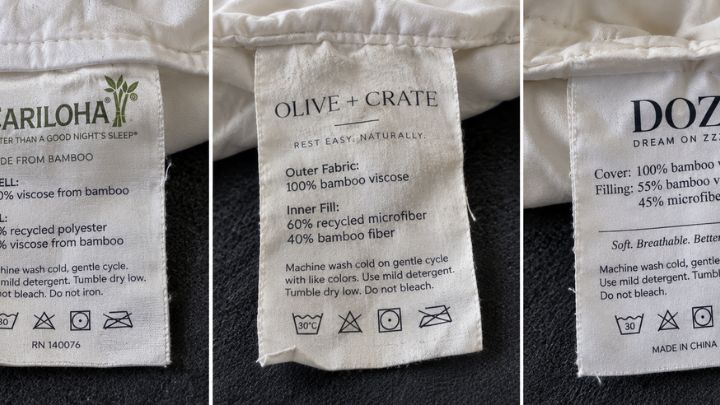
I own bamboo comforters from Cariloha, Olive + Crate and DOZ. Their shells are all made from bamboo viscose, but none uses the same fill blend. Once I started reading both lines on the labels, the differences between them made much more sense.
⚡ Quick Answer: What Is Inside a Bamboo Comforter?
- Short Answer: Most bamboo comforters combine a bamboo-viscose shell with bamboo-derived, polyester or microfiber fill. Some premium comforters use bamboo viscose in both layers, while others use bamboo only in the shell.
- The Shell: This is the woven fabric surrounding the comforter. It affects the surface feel, drape and breathability of the outer layer.
- The Fill: This is the insulation inside the stitched chambers. It has the larger influence on loft, weight and warmth.
- What I Check: I look for separate percentages for the shell and fill, then check the care label. The word bamboo by itself does not tell me how the entire comforter is constructed.
Shell vs. Fill at a Glance
| Comforter layer | What it is | What it affects most | Common materials |
|---|---|---|---|
| Shell | Woven outer fabric | Surface feel, drape and airflow around the fill | Bamboo viscose, cotton, polyester or blends |
| Fill | Insulation inside the comforter | Warmth, loft, weight and compression | Bamboo viscose, polyester microfiber, recycled polyester, down, silk, cotton or blends |
| Stitching | Seams that divide and contain the fill | Fill movement and how evenly the comforter stays padded | Box stitch, sewn-through or baffle-box construction |
| Duvet cover | Removable outer cover placed over the comforter | Washability, color and the fabric touching the sleeper | Bamboo viscose, cotton, linen, polyester or blends |
The Three Material Labels in My Linen Closet
My comforters show how much variety can sit beneath the same product category.
| Comforter | Shell | Fill |
|---|---|---|
| Cariloha Mid-Loft | 100% viscose from bamboo | 80% recycled polyester; 20% viscose from bamboo |
| Olive + Crate All Season | 100% bamboo viscose | 60% recycled microfiber; 40% bamboo fiber |
| DOZ All-Season | 100% bamboo viscose | 55% bamboo viscose; 45% microfiber |
The DOZ has the largest percentage of bamboo-derived fill, but the Cariloha is still my favorite overall. Its baffle-box construction and fuller loft matter more to me on the bed than winning a percentage comparison.
That is the central lesson: materials matter, but the finished comforter is the combination of its shell, fill weight, stitching and dimensions.
What Does the Shell Do?
The shell is the fabric envelope that holds the fill. It is woven, much like a sheet or duvet cover, and then sewn into chambers that keep the insulation distributed across the bed.
A bamboo-viscose shell usually feels smooth and fluid rather than crisp. That is easy to notice when the comforter is used without a duvet cover. Once a cover is added, the cover becomes the fabric directly touching you, but the shell still affects how easily the insert bends and drapes inside it.
The shell also needs to contain the fill. A tightly woven fabric helps prevent fine fibers, feathers or down from escaping. Strong seams and edge piping can be just as important as the fiber named on the label.
Does thread count matter on a comforter shell?
Thread count tells you how densely the shell is woven. It does not tell you how warm the fill will be or whether the comforter will maintain its loft.
Thread count is one construction detail, not a quality score. I pay more attention to how the fabric feels, whether the fill works through it and how well the seams hold up.
What Does the Fill Do?
The fill creates the comforter’s insulation and most of its volume.
More fill generally produces a thicker or warmer comforter, although different materials trap heat differently. The way the fill is formed also matters. Fine loose clusters can create a different feel from a flat layer of batting even when the two comforters have similar weights.
Fill affects:
- Warmth
- Loft
- Weight over the body
- How quickly the comforter springs back after compression
- Whether it shifts or clumps
- Washing and drying requirements
This is why I do not judge warmth from the shell alone. A smooth bamboo-viscose shell can surround a light bamboo blend, a lofty polyester down alternative or warm down.
Common Bamboo-Comforter Fill Types
Bamboo viscose fill
Bamboo-viscose fill is made from regenerated cellulose fibers derived from bamboo. It tends to create a flatter, less cloudlike profile than high-loft down or some polyester alternatives.
The DOZ in my collection uses 55% bamboo viscose blended with 45% microfiber. Blending the materials can help the fill retain more loft than bamboo viscose alone.
Bamboo and polyester blends
Blended fills are common. Cariloha combines 20% viscose from bamboo with 80% recycled polyester, while Olive + Crate combines 40% bamboo fiber with 60% recycled microfiber.
Polyester can add loft and help a comforter rebound after compression. It can also change how warm, light or washable the insert feels. The exact result depends on how much fill is used and how it is constructed.
Polyester or microfiber fill
Some products use a bamboo-viscose shell around 100% polyester fill. The bamboo component is still present in the shell, but the insulation is synthetic.
This bamboo-shell and down-alternative construction may suit someone who likes the surface and drape of bamboo viscose but wants the loft or lower price of polyester fill.
Down or feather fill
A comforter can pair a bamboo-derived shell with duck or goose down. The shell and fill perform separate jobs: the shell contains the clusters, while the down provides most of the loft and insulation.
Down is known for producing substantial loft without requiring as much fill weight. It also introduces considerations such as feather allergies, animal sourcing, fill power and specialized cleaning.
Silk fill
Some inserts use a bamboo-viscose shell around mulberry silk fill. Silk filling is usually laid in thin layers rather than blown into fluffy clusters. The result tends to drape closely with less puffiness than a traditional down comforter.
Cotton or wool fill
Cotton-filled comforters often feel flatter and heavier for their warmth than down. Wool can provide warmth and moisture management with a denser, blanket-like feel. Either material can be placed inside a bamboo-derived shell, although neither makes the fill itself bamboo.
Is Bamboo Viscose the Same as Bamboo Fiber?
Most soft bamboo bedding is made from regenerated cellulose rather than strips of the original bamboo stalk.
The Federal Trade Commission says fabric made from rayon or viscose using bamboo as the plant source should be labeled “rayon made from bamboo” or “viscose made from bamboo.” A textile should be called bamboo fiber only when it is made directly from actual bamboo fiber. The FTC’s bamboo-textile guidance explains the distinction.
Viscose and rayon are two names used for the same general manufactured-fiber category. Lyocell is another regenerated cellulose fiber, made through a different production process.
For shopping purposes, I look for the complete wording and percentage instead of treating “bamboo,” “bamboo rayon” and “bamboo viscose” as three levels of quality.
What Does “100% Bamboo Comforter” Mean?
The percentage needs context.
“100% bamboo viscose shell” describes the outer fabric only. It does not describe the fill. That shell can surround polyester insulation or a different fill blend.
When bamboo viscose appears in both layers, the specifications should say so separately:
- Shell: 100% viscose made from bamboo
- Fill: 100% viscose made from bamboo
Cozy Earth’s current Bamboo Viscose Comforter is one example that lists bamboo viscose in both the shell and fill. The Cariloha, Olive + Crate and DOZ comforters I own all use blended fills instead.
Does More Bamboo Fill Mean a Cooler Comforter?
Not by itself.
A thick comforter contains more insulation than a thin one, regardless of the plant used to make part of its fabric. Room temperature, fill weight, loft, stitching and the duvet cover all contribute to how warm the bed feels.
The shell is only directly against your skin when the comforter is used without a cover. With a duvet cover in place, the cover supplies the immediate surface feel.
For a hot sleeper, I would compare these details together:
- Lightweight, midweight or heavyweight version
- GSM, fill weight or TOG rating when provided
- Fill material and percentage
- Shell material
- Duvet-cover material
- Bedroom temperature and other layers on the bed
My upcoming comforter-weight guide for hot sleepers explains GSM, TOG and loft in more detail.
How Stitching Changes the Comforter
The shell and fill list still leaves out one important part: construction.
Sewn-through or box-stitch construction: The top and bottom shell layers are stitched together to create separate boxes. This keeps fill from gathering at one end and usually creates a lower-profile comforter. The stitched lines may form thinner areas between the boxes.
Baffle-box construction: Narrow fabric walls connect the top and bottom shell layers inside the comforter. The fill stays divided but has more room to expand. My Cariloha Mid-Loft uses this construction, and its fuller shape is one reason it leads my comforter rankings.
Channel construction: Long stitched channels let the fill spread along one direction. They can create an even striped appearance, although loose fill may move farther within each channel.
How a Duvet Cover Changes the Equation
A duvet cover adds another fabric layer around the insert.
It changes the color and surface feel, protects the comforter and is usually easier to wash. It can also add weight and slightly reduce the airy feel of a lightweight insert.
I currently use a Cariloha bamboo-viscose duvet cover over a queen IKEA comforter because that combination fits my queen mattress. The cover gives me the bamboo-viscose surface I like, while the IKEA insert still determines most of the warmth and loft.
That setup does not turn the IKEA fill into bamboo. It shows how the layers can be chosen separately.
Read my guide to the best bamboo duvet covers for cover materials, closures and attachment ties.
How to Read a Comforter Listing in 60 Seconds
Before buying, find these six details:
- Shell composition: Look for a fiber name and percentage.
- Fill composition: Find a separate line for the insulation.
- Fill weight: Check GSM, TOG, ounces or lightweight/midweight wording.
- Construction: Look for baffle boxes, sewn-through boxes or channels.
- Care: Confirm whether the exact model is machine washable or dry-clean-only.
- Dimensions: Compare inches, not only Queen or King labels.
If the fill is not shown, ask the company before ordering. It is one of the main materials you are paying for.
You can see those details applied to my tested picks in the best bamboo comforters guide.
Frequently Asked Questions
Are bamboo comforters made entirely from bamboo?
Some use bamboo viscose in both the shell and fill, but many use it only in the shell or blend it with polyester inside. Read the two material lines separately.
Is bamboo fill the same as bamboo-viscose fabric?
The source fiber can be the same, but the finished forms are different. Shell fibers are spun into yarn and woven into fabric. Fill fibers are arranged as insulation inside the comforter.
Is a bamboo comforter with polyester fill still a bamboo comforter?
It can accurately be described as having a bamboo-derived shell, but the complete description should also identify the polyester fill. Whether it suits you depends on the finished feel, warmth, price and care rather than the name alone.
Which part of a comforter controls warmth?
The fill has the largest influence on warmth because it traps insulating air. Fill amount, loft and chamber construction matter along with the material.
Which part touches the sleeper?
The shell touches the sleeper when the comforter is used on its own. When it is placed inside a duvet cover, the cover becomes the outermost fabric.
Does OEKO-TEX certification prove a comforter is bamboo?
No. OEKO-TEX STANDARD 100 addresses testing for harmful substances. Material composition must still be checked separately on the product label.
Is bamboo viscose natural or synthetic?
Bamboo viscose is generally described as a manufactured or regenerated cellulose fiber. Its cellulose comes from a plant, then undergoes processing to become textile fiber.
Final Answer
A bamboo comforter is not one material from edge to edge. It is a construction made from an outer shell, an insulating fill and the stitching that holds the two together.
Start with the two material percentages. Then compare fill weight, construction, dimensions and care. Those details will tell you far more about the comforter than the word bamboo printed in the title.
In my own collection, DOZ has the most bamboo-viscose fill, Olive + Crate offers the easiest care and Cariloha delivers the fuller feel I prefer. Reading the shell and fill separately explains why.

Molly has personally tested bamboo sheets, towels, and home textiles in her own home since 2017. Every recommendation is based on at least 14 nights of real-world use, including fit, feel, construction, washing, and value. Meet Molly See how we test →