
Bamboo sheets feel special. They are smooth, cool, and soft against your skin. That also means they need more care than a tough set of cotton sheets.
The good news? You do not need a complicated laundry routine. You need the right routine for your exact sheets, plus a few smart ways to prevent stiffness, yellowing, pilling, and odors.
This guide covers more than how to wash bamboo sheets. It explains what to do when something goes wrong—and which popular laundry “hacks” can create bigger problems.
Quick answer: Check the sewn-in care label first. When the label allows machine washing, use cold or cool water, a gentle or low-agitation cycle, a small amount of mild detergent, and low heat or shade drying. Avoid chlorine bleach, fabric softener, and dryer sheets.
Before Washing Bamboo Sheets, Check the Fiber Label
“Bamboo sheets” are not all made from the same material.
Most soft bamboo bedding uses:
- Rayon or viscose made from bamboo
- Lyocell made from bamboo
- A blend of bamboo-derived fiber and another material
The word “bamboo” on the package does not tell you enough. The Federal Trade Commission says rayon or viscose made from bamboo should be labeled that way. True bamboo fiber is different from bamboo-based rayon or viscose.
This matters because each fabric, blend, dye, elastic, and trim can have different care limits.
Before washing, look for:
- The fiber content
- Maximum water temperature
- Approved wash cycle
- Drying instructions
- Bleach warnings
- Ironing instructions
- Special directions for zippers, elastic, or decorative trim
If the brand label conflicts with general advice online, the brand label wins.
If you are still comparing fabrics, our guide to bamboo viscose vs. bamboo lyocell can help you understand the difference.
The Preservation-First Way to Wash Bamboo Sheets
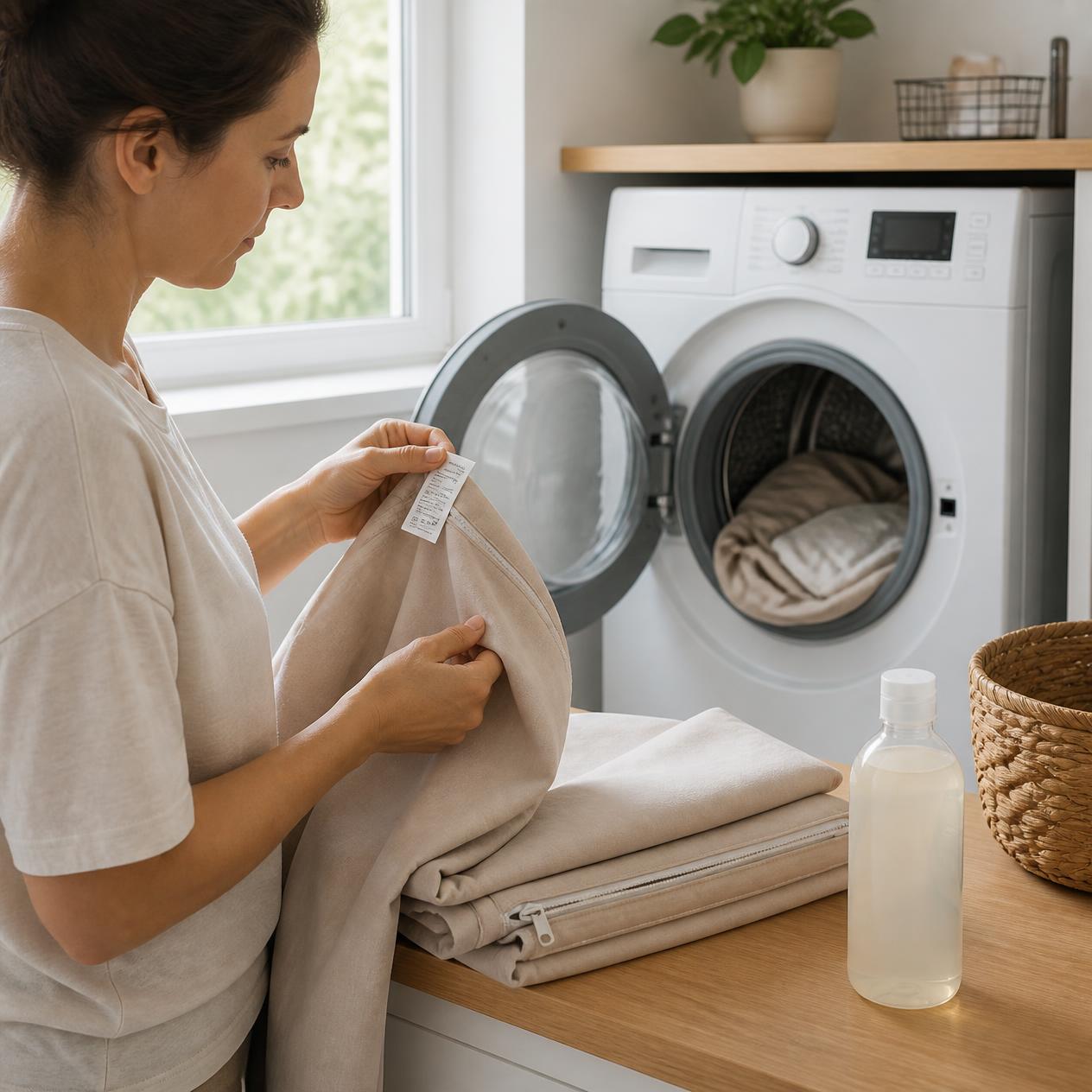
Use this routine as your safe starting point when the care label allows machine washing.
1. Wash sheets with smooth, lightweight items
The best choice is to wash bamboo sheets by themselves.
If you need to combine them with another item, choose something:
- Lightweight
- Smooth
- Similar in color
- Free of zippers, hooks, and Velcro
Avoid washing bamboo sheets with:
- Towels
- Denim
- Fleece
- Bathrobes
- Clothing with zippers
- Items with hooks or rough fasteners
- Bulky blankets
Towels are especially rough. They create friction and release lint. That friction can lead to fuzz, pilling, and a rougher feel over time.
2. Do not stuff the washer
Sheets need room to move through the water. An overloaded washer can leave behind detergent, body oils, and sweat.
It can also force the fabric into tight twists. That adds stress to the fibers.
A good rule is simple: the drum should look full, but not packed. If you have to push the sheets down to close the door, remove something.
3. Use cold or cool water
Cold or cool water is the best preservation-first choice for most bamboo sheets.
It can help reduce the risk of:
- Shrinkage
- Dye loss
- Fiber stress
- Set-in wrinkles
- Heat-related damage
Do not assume hot water will solve every oil or odor problem. It may clean more aggressively, but it can also go beyond what your sheets can safely handle.
If your label allows warm water, you can follow that instruction. If it says cold water only, do not override it to solve yellowing or body-oil stains.
4. Choose a low-agitation cycle
Use the gentlest cycle your care label allows. This may be called:
- Delicate
- Gentle
- Hand wash
- Low agitation
The goal is not simply to use a certain button on your washing machine. The goal is to reduce rubbing, twisting, and harsh movement.
A textile study on lyocell found less change when researchers used neutral detergent, a washing net, and mild agitation. That supports a gentle approach for bamboo-derived cellulosic fabrics.
5. Measure less detergent than you think you need
Too much detergent can make bamboo sheets feel:
- Stiff
- Waxy
- Itchy
- Heavy
- Less breathable
Start with the lowest amount listed for the load size and soil level. Do not fill a large detergent cap to the top unless the instructions truly call for that amount.
Use a mild detergent when possible. Avoid adding extra detergent because the sheets are large. Sheet size does not always mean the load needs more soap.
6. Add an extra rinse when needed
An extra rinse can help remove leftover detergent and other residue.
Try it if your sheets:
- Feel coated
- Smell strongly of detergent
- Feel stiff after drying
- Make your skin itchy
- Look clean but do not feel fresh
An extra rinse works better as a first step than a dramatic laundry-stripping treatment.
7. Remove the sheets right away
Do not let wet sheets sit in the washer for hours. They can develop a stale smell and become deeply wrinkled.
Shake each sheet out before drying. This helps separate twisted layers and gives the fabric a better chance to dry evenly.
How to Load the Washer to Reduce Pilling
Pilling does not come from one single cause. It can result from friction, crowding, rough laundry items, aggressive washing, high heat, or the fabric itself.
You can lower the risk by changing the way you handle the sheets.
Protect the sheet surface
Before washing, close:
- Duvet-cover zippers
- Pillowcase closures
- Any hooks or fasteners
Turn items with rough hardware inside out when possible. Keep the smooth sheet surface away from anything that can catch or scrape it.
A mesh washing bag may help with smaller items such as pillowcases. Make sure the bag is large enough for the item to move. A tightly packed bag can also restrict cleaning.
Avoid mixing different laundry jobs
Do not wash heavily soiled towels with delicate bedding just to save a load.
Towels need more aggressive cleaning. Bamboo sheets need less friction. Combining the two forces one load to serve two different purposes.
Do not brush or scrape pills aggressively
A fabric shaver may remove some pills, but it can also cut or weaken the surface if used too hard.
If pilling is severe, first fix the likely cause:
- Separate the sheets from rough items.
- Use a smaller load.
- Lower the agitation.
- Reduce dryer heat.
- Avoid fabric softener and dryer sheets.
- Follow the brand’s care instructions.
Some pilling may not be reversible. Care can prevent more damage, but it cannot always restore the original surface.
Bamboo Sheet Detergent: What Helps and What Does Not
Fabric softener is not the answer
Fabric softener works by leaving a coating on the fabric. That coating may make sheets feel slippery at first, but it can also trap residue and reduce breathability.
Skip:
- Liquid fabric softener
- Dryer sheets
- Scent boosters
- Heavy fragrance beads
Bamboo sheets do not need to be “softened.” If they feel rough, treat that as a clue. Too much detergent, heat, friction, or residue may be the real problem.
What about enzyme detergent?
This question deserves a careful answer.
Laundry enzymes target different types of stains. For example:
- Lipase helps break down oils and body sebum.
- Protease helps target protein-based stains.
- Cellulase is a different enzyme that can affect cellulose-based fibers during prolonged textile treatments.
That does not mean every enzyme detergent will destroy bamboo sheets. It also does not mean every enzyme product is safe for every bamboo sheet.
Use this approach:
- Follow the care label.
- Choose enzyme-free detergent if your brand requires it.
- Use a targeted stain product only after testing a hidden area.
- Follow the product’s contact-time instructions.
- Avoid long, improvised soaks.
- Avoid repeated heavy treatments with products that contain cellulase unless the manufacturer approves them.
For regular washing, a mild detergent used in a small amount is the safer choice.
What about hard water?
Hard-water minerals can contribute to dullness, stiffness, and residue. If your sheets feel coated even after you reduce detergent, hard water may be part of the problem.
First try:
- A smaller detergent dose
- An extra rinse
- A less crowded load
- Washing-machine cleaning and maintenance
Do not jump straight to laundry stripping. It can be harsh, and it may not fix the cause.
How to Dry Bamboo Sheets Without Making Them Crispy
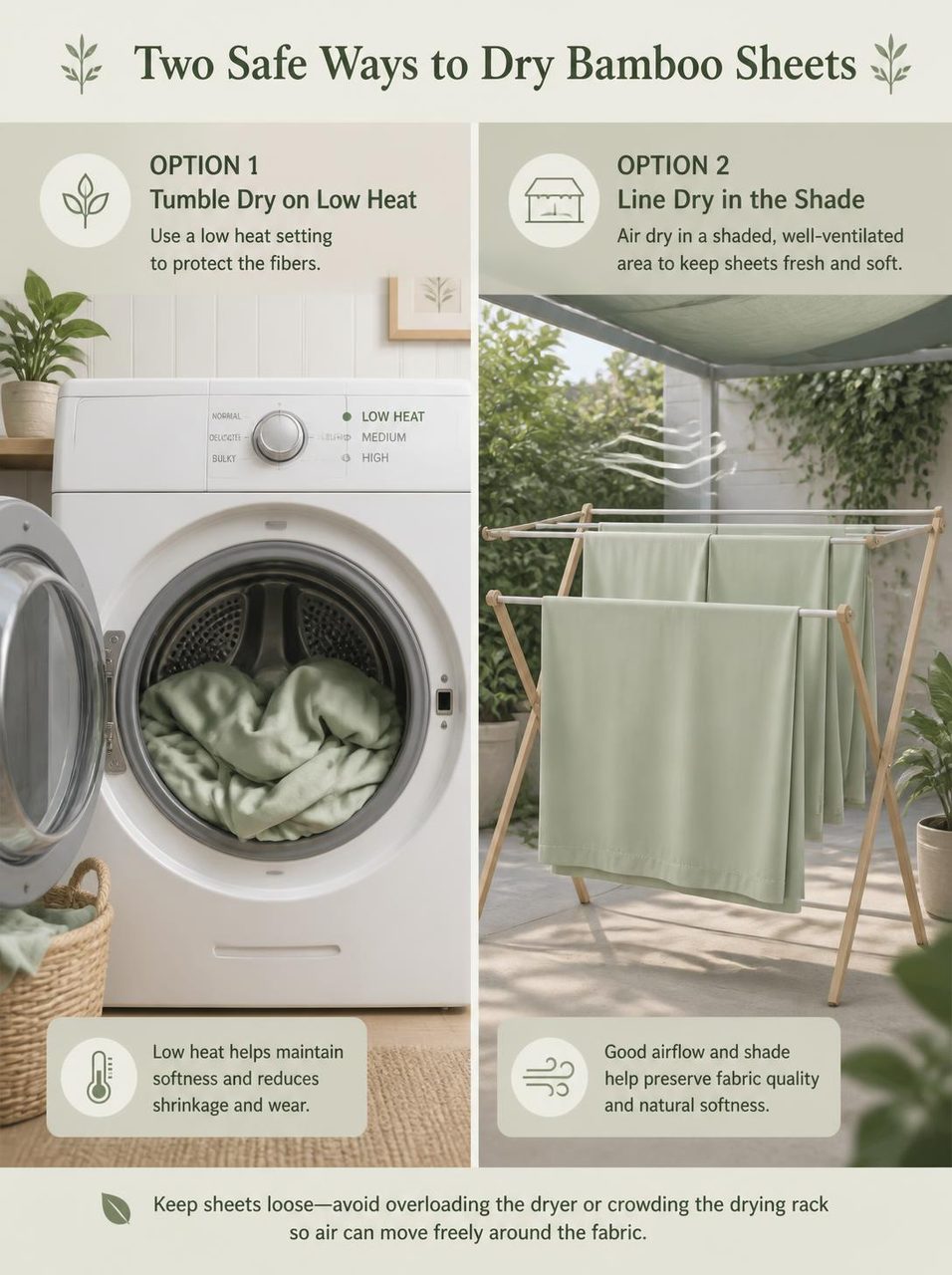
Always follow the drying instructions on your sheets. Brands do not all give the same advice.
Some allow normal machine drying. Others recommend low heat, air fluff, or line drying. Some recommend wool dryer balls, while others advise against them because of friction.
When the label does not give a clear answer, use the preservation-first method:
- Choose the lowest practical dryer heat.
- Use air fluff if your machine offers it.
- Shake the sheets out before drying.
- Do not overdry them.
- Remove them as soon as the cycle ends.
- Smooth them on the bed or fold them right away.
- Line-dry in the shade when allowed.
Extended direct sunlight can fade some colors. Shade drying is the safer choice when color preservation matters.
Should you use dryer balls?
There is no universal answer.
Some bamboo-sheet brands recommend wool dryer balls. Others say to avoid dryer balls because they may increase friction and pilling.
If your brand gives instructions, follow them. If it does not, skip dryer balls for a preservation-first routine.
Bamboo Sheets Troubleshooting Table
| Problem | What to check first | Lowest-risk first step | Avoid |
|---|---|---|---|
| Sheets feel stiff or waxy | Too much detergent, softener, dryer sheets, hard water, or poor rinsing | Rewash with less detergent and add an extra rinse | Adding more softener or stripping the sheets by default |
| Sheets feel rough | High heat, friction, residue, or aggressive agitation | Use a smaller load, lower heat, and a gentle cycle | Scrubbing or brushing the fabric |
| Small pills appear | Towels, fleece, zippers, crowding, high heat, or fabric quality | Separate rough items and reduce friction | Promising that all pills can be removed |
| Pillowcases turn yellow | Body oils, skincare, makeup, hair products, or delayed stain care | Treat early, spot-test, wash, and inspect before drying | Using bleach without label approval |
| Sheets smell stale after drying | Residue, washer buildup, trapped soil, or overdrying | Use less detergent, an extra rinse, and clean the washer | Covering the smell with fragrance or softener |
| Light blotches appear | Dye loss, bleach, harsh pretreatment, or color transfer | Stop aggressive treatment and contact the brand if needed | Repeating stain remover without testing |
| Sheets shrink | Excess heat or an unapproved dryer setting | Follow the label and use lower heat when allowed | Repeated high-heat drying |
| Sheets stay wrinkled | Leaving them bunched up or overdrying | Shake them out and remove them promptly | High-heat drying to force wrinkles out |
How to Remove Body Oil, Makeup, Sweat, Blood, and Food
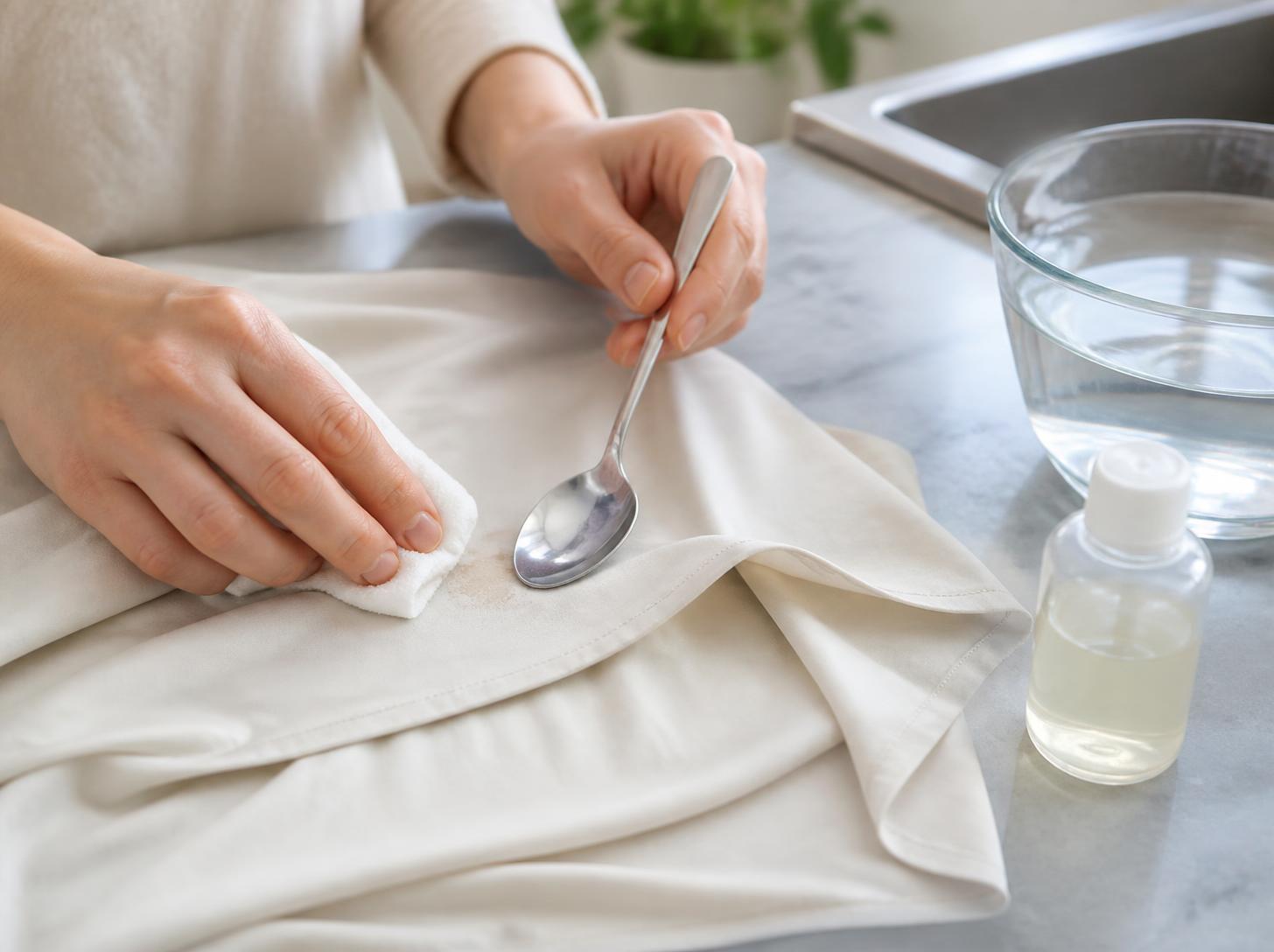
Stain removal works best when you slow down. Identify the problem, test the product, and inspect the sheets before heat touches them.
Start with a hidden-area test
Test any stain remover on:
- An inside hem
- A seam allowance
- The back corner of a pillowcase
Wait and check for color loss, light spots, or texture changes before treating the visible stain.
Use this stain-care process
- Treat the stain as soon as you notice it.
- Remove excess material with a soft cloth or the edge of a spoon.
- Start with cool water when you are unsure what caused the stain.
- Apply a label-approved stain treatment.
- Press gently with your fingers or a soft cloth.
- Do not scrub hard.
- Wash according to the care label.
- Inspect the sheets while they are still damp.
- Repeat a gentle treatment only if needed.
- Do not heat-dry the sheets until the stain is gone.
Body oil, lotion, and makeup
Oil-based marks often come from:
- Skin oils
- Night creams
- Hair products
- Makeup
- Body lotion
- Facial sunscreen
A detergent or stain product made to target oils may help. If it contains enzymes, follow the product label and test first.
For recurring pillowcase stains, wash pillowcases more often than the rest of the bedding. You can also put on a clean pillowcase after applying heavy nighttime skincare.
Our guide to best bamboo pillowcases can help if pillowcase softness and facial-oil transfer are your main concerns.
Sweat and odor
Sweat itself may not leave a strong mark, but body oils and product residue can build up over time.
Try:
- Washing the sheets promptly
- Using less detergent
- Adding an extra rinse
- Avoiding softener and dryer sheets
- Cleaning the washing machine
- Increasing wash frequency if you sweat heavily
Do not use fragrance to hide an odor. If sheets smell clean when wet but stale after drying, residue or washer buildup may be the cause.
Blood
Start with cool water. Heat can set protein-based stains.
Blot or rinse gently. Do not scrub hard. Use only a product approved for the fabric, and follow its instructions carefully.
Food and unknown stains
Remove solids first, then test a targeted product on a hidden area.
If you do not know what caused the mark, cool water is a safer first step than hot water. Check the stain before drying.
What Not to Do With Bamboo Sheets
Some laundry tips sound helpful but are too broad for delicate bamboo bedding.
Do not use chlorine bleach
Chlorine bleach can damage fibers and color. Do not use it on bamboo sheets unless the care label clearly allows it—which is uncommon.
Do not assume oxygen bleach is safe
Some advice recommends oxygen bleach for yellowing. Other care instructions say to avoid bleach products altogether.
Do not treat oxygen bleach as a universal rescue. Use it only if your sheet label permits it, and test it first.
Do not add vinegar every wash
Vinegar may help with some odors or residue, but it is not a universal reset button. Consumer laundry guidance warns that vinegar can damage rubber hoses and seals in some washing machines, especially front-loaders.
Before using vinegar, check both:
- Your sheet-care instructions
- Your washing-machine manual
Start with less detergent, an extra rinse, and washer maintenance instead.
Do not rely on laundry stripping
Stripping often uses strong products, long soaks, and extra agitation. It may remove some buildup, but it can also stress the fabric.
Try the gentler fixes first:
- Reduce detergent.
- Remove softener and dryer sheets.
- Use an extra rinse.
- Avoid overloading the washer.
- Clean the washer.
Do not override the label to remove a stain
If your sheets need hot water or bleach to remove a stain, but the label forbids those methods, you have a real tradeoff.
You may be able to improve the mark with careful pretreatment. But some set-in stains, dye changes, pilling, and heat damage cannot be fully reversed.
That is a material limitation—not a reason to quietly ignore the care instructions.
A Weekly Bamboo Sheets Care Plan
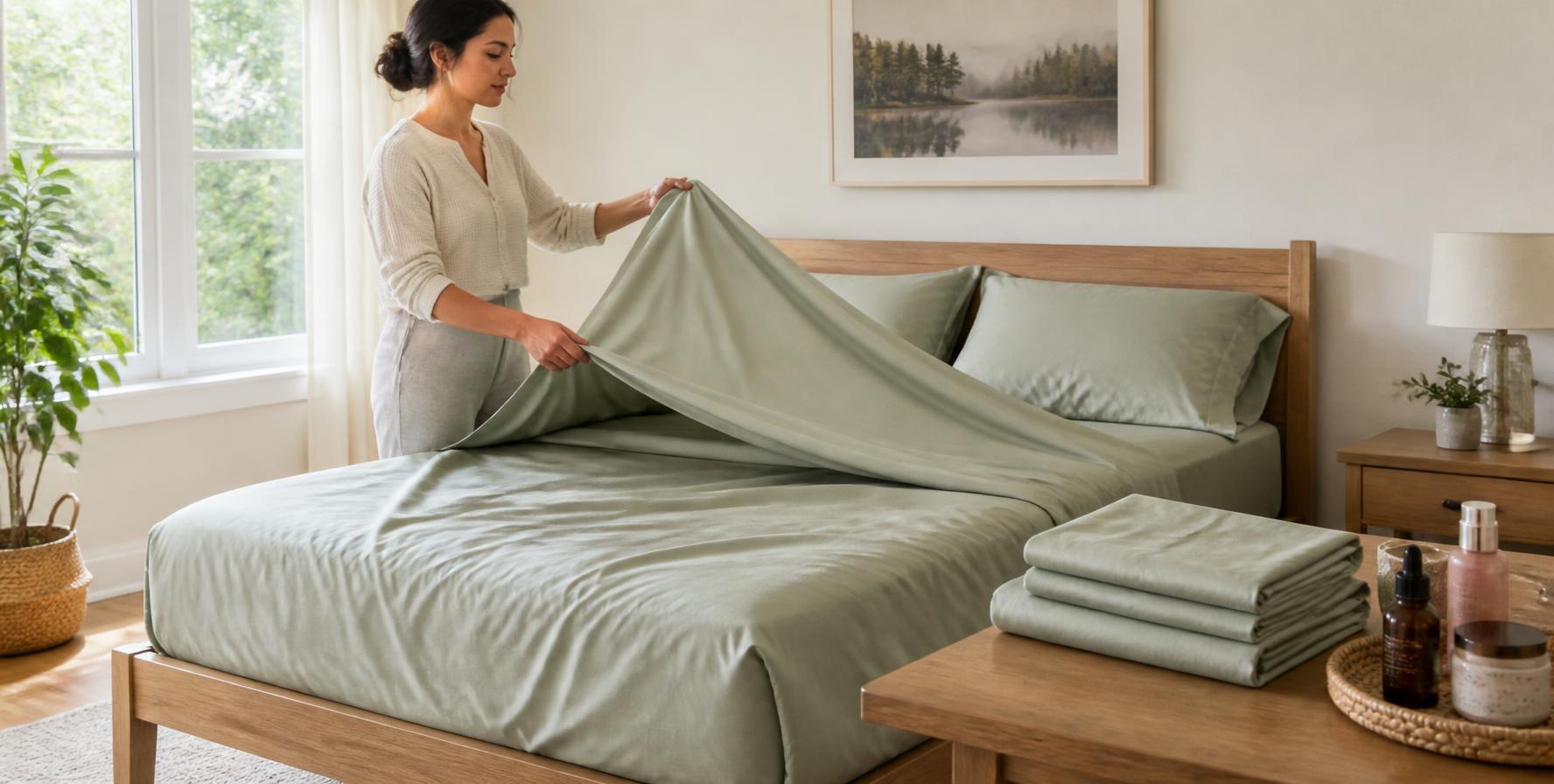
A simple routine prevents more problems than emergency stain treatments.
Each night
Try to reduce product transfer:
- Let skincare dry before bed.
- Keep wet hair products away from the pillowcase.
- Use a clean pillowcase if you apply heavy oils or creams.
- Keep pets from sleeping on the sheets if they bring in dirt or rough debris.
Once a week
Wash actively used sheets about once a week as a general baseline.
Wash more often if you:
- Sweat heavily
- Have pets in the bed
- Are sick
- Have allergies
- Have oily skin or hair
- Use heavy skincare or hair products
- See visible soil
The FTC says rayon made from bamboo does not retain the antibacterial properties of the original bamboo plant. Do not wash less often because your sheets are marketed as naturally antibacterial or self-cleaning.
Between washes
- Air the bed before making it.
- Remove damp towels and clothing from the bed.
- Treat spills as soon as possible.
- Keep an extra set ready.
- Change pillowcases sooner if they collect oil or makeup.
Rotate two or three sets
Rotating sheets gives each set time to be washed, dried, and stored without rushing.
It also reduces the wear placed on one set. Rotation will not make a low-quality fabric last forever, but it can help you avoid washing one set constantly.
If you are choosing a new set, compare our best bamboo sheets before you buy.
How to Store Bamboo Sheets
Store sheets only when they are fully clean and dry.
For better storage:
- Fold them loosely.
- Keep them in a dry, well-ventilated space.
- Avoid damp bathrooms.
- Do not compress them under heavy items.
- Keep strong fragrances away from the fabric.
- Store matching pillowcases with the fitted sheet if that helps prevent lost pieces.
If sheets smell musty after storage, wash and dry them fully before putting them away again. Do not seal slightly damp bedding in a container.
When Bamboo Sheets Are Too Damaged to Rescue
Some problems can improve. Others cannot.
You may be able to reduce:
- Detergent residue
- Mild odor
- Fresh body-oil marks
- Light wrinkles
- Some surface fuzz
You may not be able to reverse:
- Severe pilling
- Dye loss
- Bleach spots
- Deep heat shrinkage
- Melted or weakened fibers
- Large tears
- Permanent set stains
If the problem appeared soon after purchase, take photos and contact the brand. Keep your receipt and note the wash and dry settings you used.
When care limitations do not fit your home, compare bamboo sheets vs. cotton sheets before replacing them.
The Bamboo Sheets Wash-Day Checklist
Use this quick checklist every time:
- [ ] Check the sewn-in care label.
- [ ] Close zippers and fasteners.
- [ ] Separate towels, fleece, denim, and rough items.
- [ ] Do not overload the washer.
- [ ] Use cold or cool water when allowed.
- [ ] Choose low agitation when allowed.
- [ ] Measure the lowest effective amount of detergent.
- [ ] Skip chlorine bleach, softener, and dryer sheets.
- [ ] Add an extra rinse if residue is a problem.
- [ ] Shake sheets out before drying.
- [ ] Use the lowest approved dryer heat.
- [ ] Remove sheets promptly.
- [ ] Inspect stains before heat-drying.
- [ ] Store only when completely dry.
FAQ About Advanced Bamboo Sheets Care
Can bamboo sheets go in the dryer?
Usually, yes, if the sewn-in care label allows it. Use the lowest practical heat and remove the sheets promptly. Some brands allow normal drying, while others require low heat or air fluff, so do not assume every bamboo sheet has the same limit.
What temperature should I use to wash bamboo sheets?
Cold or cool water is the safest general starting point when machine washing is allowed. Follow the exact temperature limit on your sheet label.
Do I need a delicate cycle for bamboo sheets?
A delicate or low-agitation cycle is a preservation-first choice. Some labels may allow a normal cycle. The important goal is to reduce friction, twisting, and rough movement.
Can I wash bamboo sheets with towels?
It is best not to. Towels create friction and release lint. Wash bamboo sheets alone or with a small load of smooth, lightweight items.
Can I use fabric softener or dryer sheets?
It is best to skip both. They can leave a coating on the fabric and may cause residue, reduced breathability, or skin irritation.
Why do my bamboo sheets feel stiff after washing?
Common causes include too much detergent, fabric softener, dryer-sheet residue, hard water, an overloaded washer, or incomplete rinsing. Rewash with less detergent and use an extra rinse.
Why are my bamboo sheets pilling after only a few washes?
Look for friction from towels, fleece, zippers, or an overloaded washer. High heat and aggressive agitation may also contribute. Some pilling can come from the fabric itself and may not be fully reversible.
Can I use enzyme detergent on bamboo viscose or bamboo lyocell sheets?
Check the product label first. Enzyme detergents are not all the same, and it is too broad to say that all enzymes damage bamboo sheets. If your brand requires enzyme-free detergent, follow that rule. For stains, test any targeted product and avoid long, improvised soaks.
Can I use oxygen bleach on white bamboo sheets?
Only if the care label allows it. Do not treat oxygen bleach as universally safe for bamboo sheets. Spot-test first.
Is vinegar safe for bamboo sheets and my washing machine?
There is no universal answer. Some bedding brands suggest vinegar, but vinegar may damage rubber hoses and seals in some washers. Check both manuals before using it.
How do I remove body-oil or lotion stains from bamboo sheets?
Treat the mark early with a product designed for oil stains, after testing it on a hidden area. Wash according to the care label and inspect the sheets while damp. Do not heat-dry them until the stain is gone.
How often should I wash bamboo sheets?
Once a week is a reasonable baseline for actively used sheets. Wash more often if you sweat heavily, have pets, are ill, have allergies, or use oily skincare or hair products.
Are bamboo sheets naturally antibacterial, so can I wash them less often?
No. Rayon or viscose made from processed bamboo does not retain the original plant’s antibacterial properties. Follow normal bedding hygiene practices.
How do I store bamboo sheets so they do not yellow or smell musty?
Wash and dry them fully before storage. Keep them in a cool, dry, ventilated space. Avoid damp areas, heavy compression, and strong fragrances.
When are bamboo sheets too damaged to rescue?
Severe pilling, bleach spots, heat shrinkage, dye loss, melted fibers, and large tears may not be repairable. Contact the manufacturer if the damage appeared early or does not match the care instructions.