
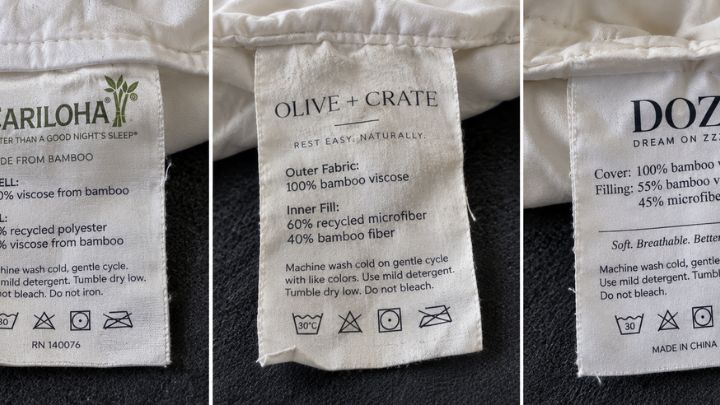
The safest way to wash a bamboo comforter is to begin with its care label. Some bamboo comforters can go through a cold, gentle machine cycle. Others—including my Cariloha Mid-Loft and DOZ All-Season—are marked dry clean only.
That difference comes from the complete construction, not the word bamboo. The shell, fill blend, stitching and weight all affect how the comforter responds to water and tumbling.
⚡ Quick Answer: How Should You Wash a Bamboo Comforter?
- If the label says machine washable: Wash the comforter by itself in a large-capacity machine using cold water, a gentle or delicate cycle and a small amount of mild detergent. Use an extra rinse when available.
- If the label says dry clean only: Spot-clean small marks and take the full comforter to a professional cleaner. Hand washing is still washing, so it is not a substitute for dry cleaning.
- To protect the fill: Give the comforter room to move, avoid bleach and fabric softener, use only the drying method allowed on the label, and make sure the center is completely dry before returning it to the bed or closet.
- My most important tip: Do not wash a queen or king comforter in a drum that leaves it tightly packed. A larger laundromat machine is much safer than forcing it into a washer that is too small.
Check the Label Before Adding Water
Find the sewn-in care label and read the complete sequence of washing and drying symbols. Do this even if you have washed another comforter from the same brand.
The three comforters in my current guide have different instructions:
| Comforter | Published care instructions | What I would do |
|---|---|---|
| Cariloha Mid-Loft | Dry clean only | Use a duvet cover, spot-clean minor marks and use a professional cleaner |
| Olive + Crate All Season | Machine wash separately in cold water on gentle; tumble dry low or line dry in shade | Wash only when the drum is large enough for the comforter to move freely |
| DOZ All-Season | Dry clean only | Use a duvet cover and arrange professional cleaning when needed |
You can compare their materials and construction in my guide to the best bamboo comforters.
What You Need for a Machine-Washable Comforter
- A washer large enough for the comforter to move
- Mild liquid or fully dissolving detergent
- A stain cloth or soft white towel
- A large-capacity dryer, drying rack or clothesline, depending on the label
- Wool dryer balls or clean dryer balls only when tumble drying is permitted
Avoid adding towels, sheets, jeans or clothing to the load. Washing the comforter alone gives it more room and prevents zippers, hooks or metal fasteners from catching the shell.
How to Wash a Bamboo Comforter in a Washing Machine
These steps apply only when the care label permits machine washing.
1. Remove the duvet cover
Wash the cover separately according to its own label. A duvet cover is a flat fabric layer and usually has different instructions from the filled insert inside it.
My bamboo duvet-cover washing guide covers that process separately.
2. Inspect the shell and seams
Spread the comforter across the bed and check both sides. Look closely at the edges, box stitching and attachment loops.
Repair an open seam before washing. Water and agitation can turn a small opening into a larger tear and release the fill into the machine.
3. Treat small stains first
Apply a little diluted mild detergent to a white cloth and blot the stained area. Work from the outside of the mark toward the center.
Avoid hard scrubbing. Bamboo-viscose fabric is less strong when wet, and aggressive rubbing can roughen the surface or distort the weave.
Rinse or blot away the pretreatment before the full wash so a concentrated patch of detergent does not remain in the shell.
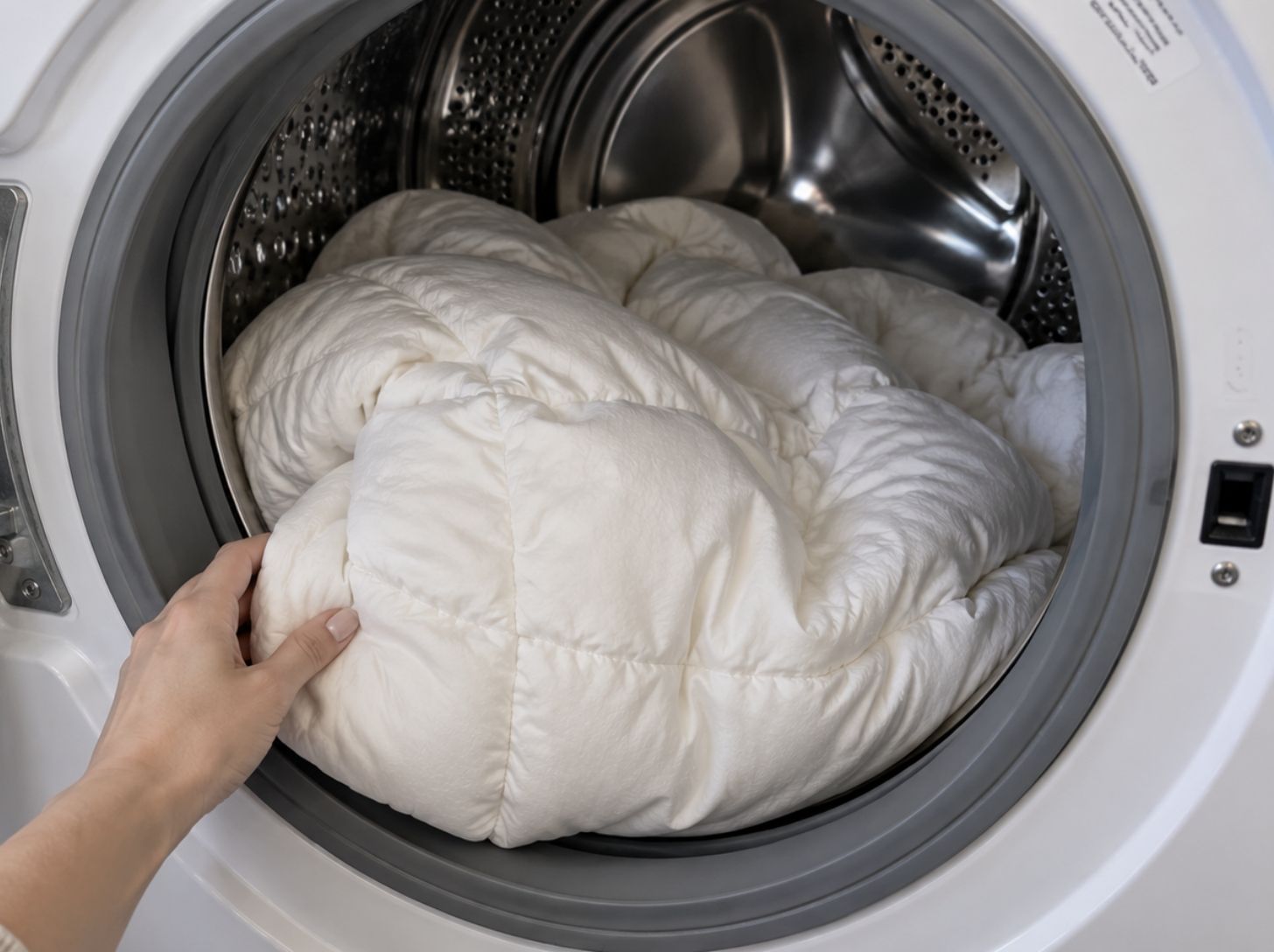
4. Make sure the washer is large enough
Place the dry comforter loosely in the drum before adding detergent. It should bend and settle naturally rather than needing to be pushed down with force.
The comforter needs space for water and detergent to pass through the shell and fill. It also needs room to move during rinsing and spinning. If it fills the drum tightly while dry, it will become even heavier and harder to balance after absorbing water.
Whirlpool recommends a large-capacity or commercial machine for bulky comforters and notes that the item must have room to agitate and tumble. Check your washer manual as well as the comforter label.
I would take an oversized queen or king comforter to a laundromat when my home machine cannot hold it loosely.
5. Use cold water and a gentle cycle
Choose the settings printed on the label. For the Olive + Crate, that means cold water and a gentle or delicate cycle.
Cold water reduces stress on the bamboo-viscose shell and lowers the risk of shrinkage or dye movement. A gentle cycle limits harsh agitation while still moving water through the comforter.
Use the washer’s bulky or bedding cycle only when it also matches the label and machine instructions. Cycle names vary, so check what the setting actually does on your appliance.
6. Measure a small amount of mild detergent
More detergent does not make a bulky comforter cleaner. Excess soap is difficult to rinse from thick fill and can leave stiff or uneven patches.
Use a mild detergent without bleach or fabric softener. Measure for the load and your machine rather than pouring directly over the comforter.
I prefer liquid detergent for a cold wash because it disperses readily, but a powder is fine when it dissolves completely in the selected temperature and machine.
7. Add an extra rinse
An extra rinse helps remove detergent from the center of a thick insert. This is particularly useful if you see suds late in the cycle or the comforter feels slick after the first rinse.
Do not add fabric softener during the rinse. It can coat the fibers and make the fill harder to rinse evenly.
8. Support the wet comforter when removing it
A saturated comforter is much heavier than a dry one. Lift it with both arms and support its weight instead of pulling it from one corner or attachment loop.
Check that the seams are intact before moving to the dryer or drying rack.
How to Dry a Bamboo Comforter Without Clumping the Fill
Drying deserves as much care as washing. The shell can feel dry while moisture remains trapped inside the fill.
When the label permits tumble drying
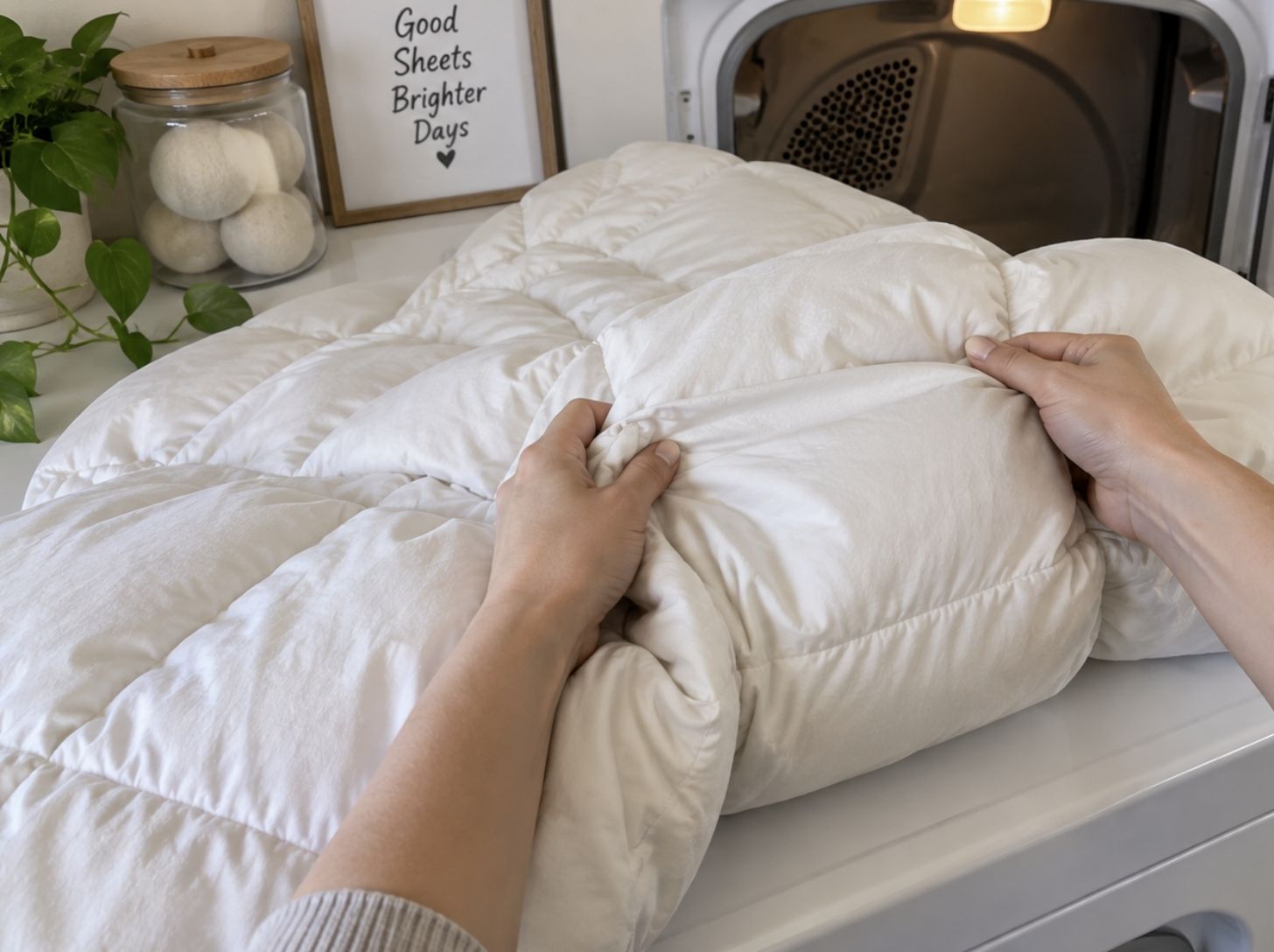
Use a large-capacity dryer on the permitted low-heat or delicate setting. Give the comforter room to lift and fall inside the drum.
Pause the dryer every 20 to 30 minutes. Remove the comforter, shake it gently and use your hands to spread any damp or compacted areas before returning it to the drum.
Dryer balls can help separate synthetic or down-alternative fill when the manufacturer permits tumble drying. They should move freely around the comforter; they cannot do much in an overloaded drum.
When the label permits line drying
Distribute the comforter’s weight across several lines or a broad drying rack instead of hanging the entire wet load from one corner. Turn it periodically and break up dense areas with your fingers.
Olive + Crate specifies line drying in the shade as an option. Direct sun can fade fabric, so follow the shade instruction rather than treating strong sunlight as a shortcut.
How to tell when the center is dry
Check more than the outer surface. Press into several thick sections and along the seams. The comforter needs more drying time if you find:
- Cool or damp patches
- Dense clumps
- A musty smell
- Sections that feel heavier than the rest
Do not put a partly damp comforter back inside a duvet cover or storage bag. Trapped moisture can produce odor and mildew.
What If the Label Says Dry Clean Only?
Do not put the comforter in the washer, even on a hand-wash setting. Do not soak it in a bathtub either.
“Dry clean only” means the manufacturer has not approved washing the complete insert in water. The shell might tolerate a cold wash while the fill mats, shifts or dries unevenly.
For my Cariloha and DOZ comforters, I would:
- Keep the insert inside a washable duvet cover.
- Blot minor spots promptly without soaking the fill.
- Air the comforter in a dry, shaded, well-ventilated place.
- Take it to a cleaner experienced with filled bedding when a full cleaning is needed.
- Show the cleaner the label rather than describing it only as a bamboo comforter.
A green or wet-cleaning service may be available locally, but ask whether its process follows the label and whether it accepts responsibility for a bamboo-viscose shell and blended fill.
How to Spot-Clean a Bamboo Comforter
Spot cleaning is useful for a small mark that has not soaked deeply into the fill.
- Place a clean white towel beneath the stained area.
- Mix a small amount of mild detergent with cool water.
- Dip a white cloth into the solution and wring it out well.
- Blot the mark without saturating the comforter.
- Blot again with a second cloth dampened with plain water.
- Let the area dry completely with plenty of airflow.
Test any cleaning product on a hidden section first. For blood, oil, makeup or another difficult stain, follow the comforter’s label or consult a professional rather than experimenting with bleach or strong stain remover.
How to Fix Clumped Fill After Washing
Clumping is easier to correct while the fill is still slightly damp.
Lay the comforter flat and feel each chamber. Gently pull apart dense areas with your fingers, working from both sides of the shell. Then continue the label-approved drying process.
If tumble drying is allowed, return the comforter to a roomy dryer on low or no heat with dryer balls and pause regularly to redistribute it.
For a fully dry comforter, massage each box and shake the insert from several edges. Fill that has migrated through a damaged seam or permanently matted may not return to its original shape.
Washing Mistakes That Damage Comforters
Ignoring “dry clean only”: A gentle cycle cannot make a dry-clean-only insert machine washable.
Stuffing it into a small washer: A packed drum prevents even washing and rinsing. The wet weight can also unbalance the machine.
Using too much detergent: Soap residue can leave the fill stiff, heavy or uneven.
Adding bleach or fabric softener: Bleach can damage or discolor the shell. Fabric softener leaves a coating that is difficult to remove from a bulky insert.
Using high heat: High heat can shrink the shell or damage synthetic fill. Follow the label and expect a large comforter to take time.
Stopping when the outside feels dry: Moisture can remain deep inside the comforter after its surface feels ready for the bed.
Pulling a wet comforter by one corner: The added water weight puts unnecessary strain on seams and loops.
How Often Should You Wash a Bamboo Comforter?
Wash the insert when its label allows and it is genuinely soiled, has absorbed a spill or has developed an odor. The right schedule depends on whether you use a top sheet or duvet cover, whether pets sleep on the bed and how much direct contact the comforter receives.
A removable duvet cover greatly reduces direct exposure to body oils and everyday dirt. I wash the cover much more often than the insert underneath it.
Between full cleanings:
- Air the comforter in a dry, shaded place
- Shake and rotate it when changing the bedding
- Treat small marks promptly
- Keep it inside a washable cover
- Store it only when fully dry
Frequently Asked Questions
Can every bamboo comforter go in the washing machine?
No. Olive + Crate permits machine washing for its All Season comforter. Cariloha labels its Mid-Loft dry clean only, as does DOZ for its All-Season model. Follow the label attached to your comforter.
Can I hand wash a dry-clean-only bamboo comforter?
No. Hand washing still saturates the shell and fill with water. Use professional cleaning when the label says dry clean only.
What detergent should I use?
For a machine-washable comforter, use a measured amount of mild detergent without bleach or fabric softener. Follow any more specific detergent instructions on the label.
Can I put a bamboo comforter in the dryer?
Only when the care label permits it. Olive + Crate allows a low or delicate tumble-dry cycle. Other bamboo comforters may require line drying, spot cleaning or professional care.
Why is my comforter lumpy after washing?
The fill may have compacted while wet, the drum may have been too crowded or drying may be incomplete. Separate damp clumps by hand and continue drying with the approved method.
Can I use dryer balls?
Dryer balls can help redistribute fill when tumble drying is allowed. They do not override a no-tumble-dry or dry-clean-only label.
Should I wash the comforter before using it?
Follow the manufacturer’s instructions. A duvet cover can be washed before use and placed around an insert that should not be machine washed.
Final Answer
The correct washing method comes from the care label, not the bamboo name.
For a machine-washable comforter, use a roomy washer, cold water, a gentle cycle, mild detergent and a thorough rinse. Dry it using the approved low-heat or line-dry method, redistributing the fill until every section is completely dry.
For a dry-clean-only comforter, use a washable duvet cover, handle small spots promptly and leave full cleaning to a professional. That is the routine I use to protect the shape and fill of the comforters I paid for myself.

Molly has personally tested bamboo sheets, towels, and home textiles in her own home since 2017. Every recommendation is based on at least 14 nights of real-world use, including fit, feel, construction, washing, and value. Meet Molly See how we test →