
A comforter and a duvet insert are both filled bed coverings. A duvet cover is the removable fabric case that goes around one. The word duvet may refer to the filled insert or to the complete insert-and-cover setup, depending on the country and retailer.
The simplest way to picture it is a pillow and pillowcase: the insert provides warmth, and the cover surrounds and protects it.
⚡ Quick Answer: Which Piece Is Which?
- Comforter: A filled, quilted bed covering that can be used on its own. It may also be placed inside a duvet cover when its size and construction allow it.
- Duvet Insert: The filled inner layer designed to go inside a removable duvet cover. Inserts are often white and usually have corner loops or other attachment points.
- Duvet Cover: An unfilled fabric case with an opening, closure and internal ties or snaps. It supplies the color and surface feel but does not provide the main insulation.
- Duvet: Often another name for the filled insert. It can also describe the complete insert-and-cover system, particularly in everyday conversation.
Before Ordering: Check whether the listing includes fill. “Duvet cover set” commonly means one cover plus pillow shams or pillowcases—not a filled insert.
Duvet vs. Comforter vs. Insert vs. Cover
| Term | Contains fill? | Used alone? | Needs a separate cover? | What it does |
|---|---|---|---|---|
| Comforter | Yes | Yes | No, although you can add one | Provides warmth and a finished top layer |
| Duvet insert | Yes | Sometimes | Usually | Provides warmth and loft inside a cover |
| Duvet cover | No | Not as normal insulated bedding | It is the cover | Protects the insert and changes color or surface feel |
| Duvet | Usually | Depends on how the word is being used | Usually paired with a cover | May mean the insert or the two-piece system |
What Is a Comforter?
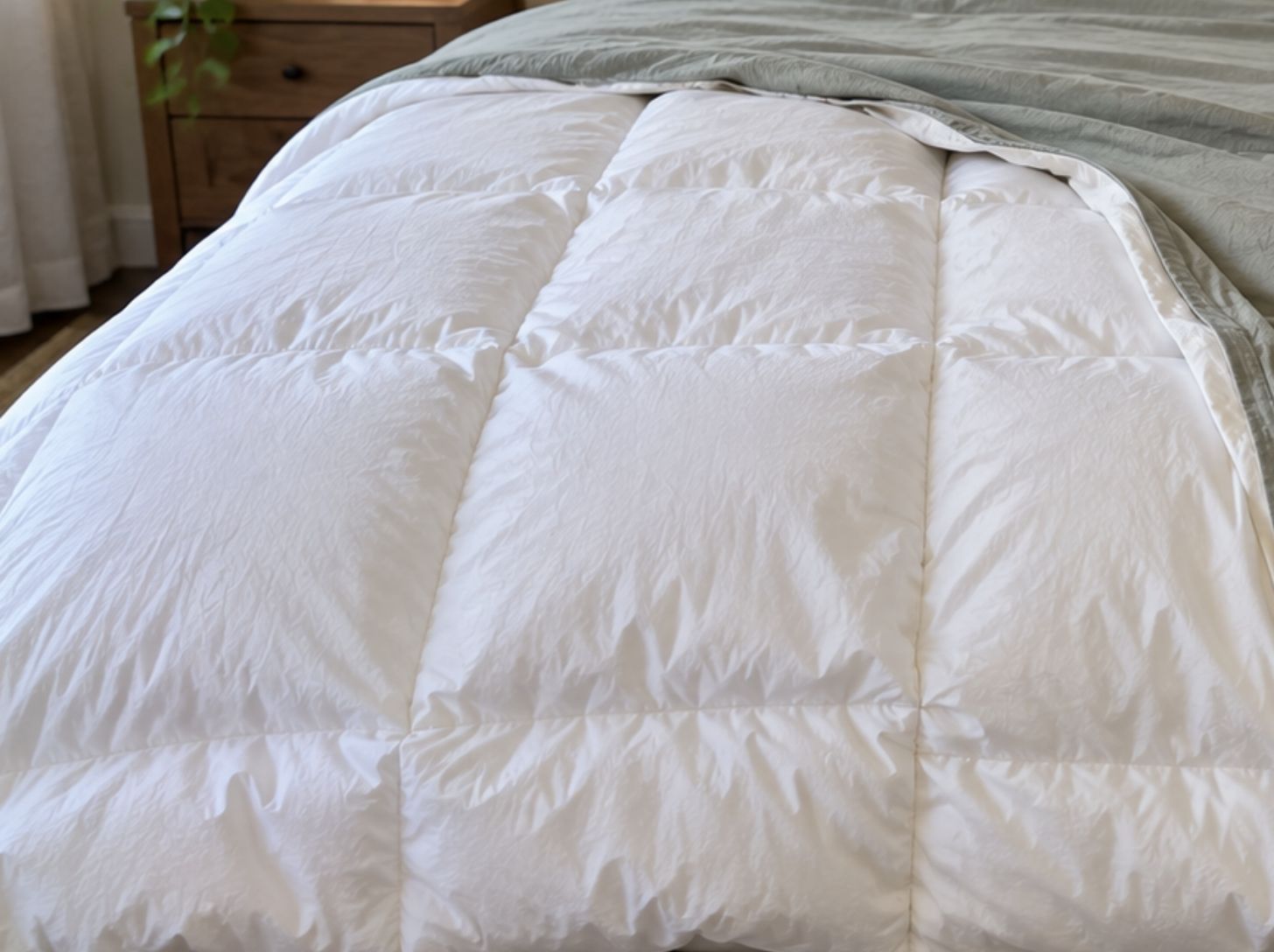
A comforter is a fabric shell permanently sewn around insulating fill. Quilting, boxes or baffles keep that fill spread across the bed.
Comforters are designed to look finished without another layer. They may be white, patterned or colored, and many bedding sets pair them with matching shams.
Because the fill cannot be removed, the complete comforter must be washed, spot-cleaned or professionally cleaned according to one care label.
A comforter can still work inside a duvet cover. My current setup uses a queen IKEA comforter inside a Cariloha bamboo-viscose duvet cover. The insert has the right warmth and size for my bed, while the cover gives me the fabric feel I prefer.
What Is a Duvet Insert?
A duvet insert is the filled part of a two-piece bedding system.
It supplies:
- Warmth
- Loft
- Weight
- Most of the insulation
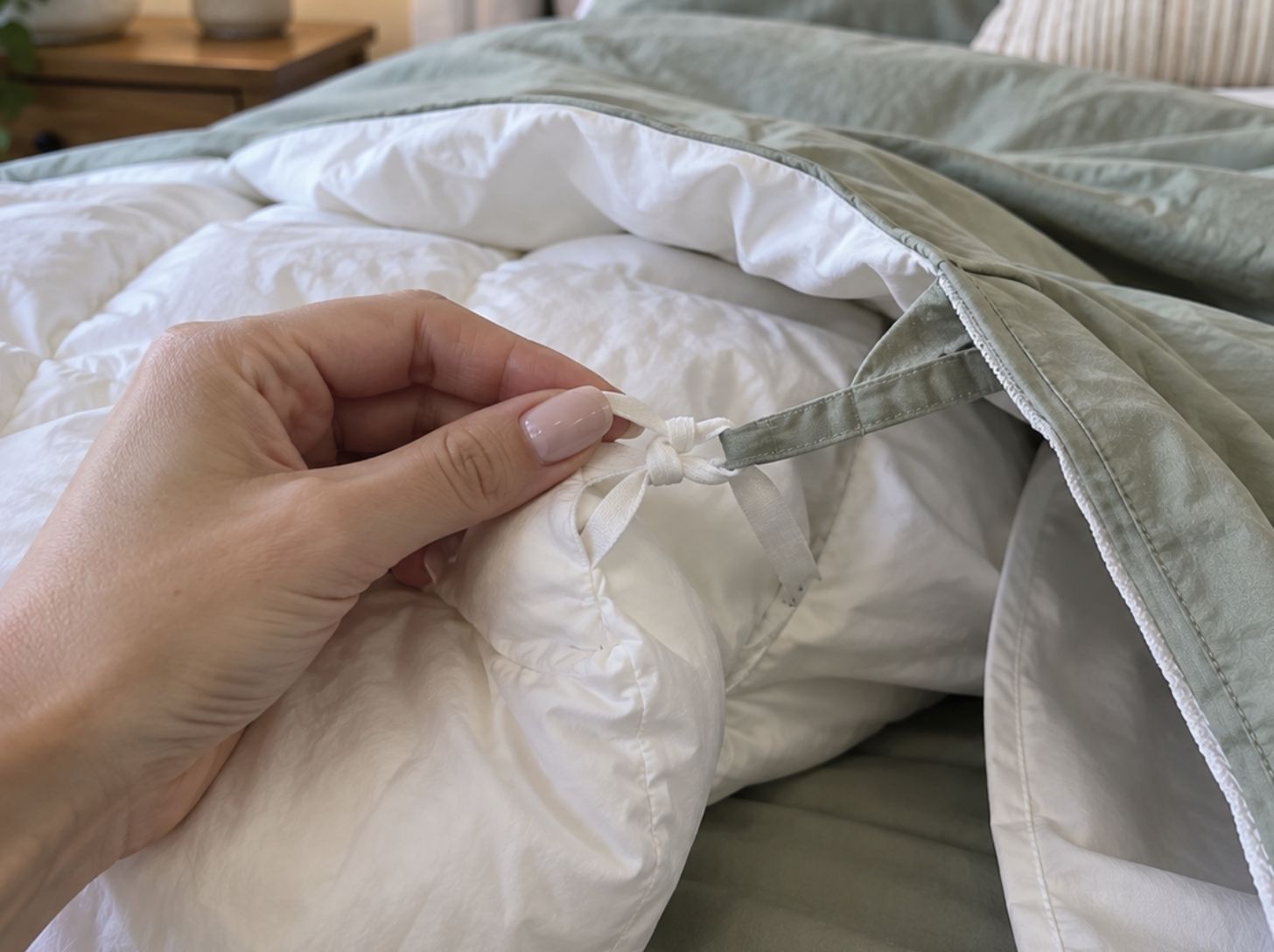
The shell is commonly white or another neutral color because it remains inside a cover. Loops along the corners and sides connect to ties, buttons or snaps inside the duvet cover.
Duvet inserts can be filled with down, down alternative, bamboo viscose, silk, wool, cotton or blends. The word duvet does not specify the material.
Some brands label the same product “duvet insert/comforter” because it can be used either way. Cariloha calls its Mid-Loft a duvet comforter: it is a filled insert with anchor loops, and it can also lie directly on the bed.
What Is a Duvet Cover?
A duvet cover is a large fabric case with three closed sides and one opening. The opening may close with buttons, a zipper, snaps or ties.
The insert slides inside and attaches at the corners or edges. Once closed, the cover becomes the visible layer on the bed.
A duvet cover changes:
- Color and pattern
- Fabric touching the sleeper
- Routine washing
- A small amount of total weight and warmth
- How easily the bed can be restyled
It does not replace the insulating fill. An empty duvet cover feels like two sheet layers sewn together.
Why Is the Word “Duvet” So Confusing?
Usage changes by region.
In the United States, retailers often use duvet insert for the filled inner piece and duvet cover for its removable case. Comforter usually describes a filled piece that is ready to use on its own.
In the United Kingdom and other countries, duvet commonly means the filled bedding itself. You place that duvet inside a duvet cover. Australia often uses doona and doona cover for a similar setup.
Retailers also use the terms interchangeably. Product construction matters more than the heading chosen for the page.
Does a Duvet Cover Come With an Insert?
Usually not.
A duvet-cover listing normally includes the empty cover. A set may add one or two matching pillow shams, but the filled insert is commonly sold separately.
Look for an “included in the set” section. Useful clues include:
- Duvet cover: No fill; usually lists a closure and internal ties
- Cover set: Cover plus sham or pillowcase pieces
- Duvet insert: Filled item; lists fill material and warmth
- Comforter set: Filled comforter plus coordinating pieces
- Bundle: May include both cover and insert, but check every named component
Product photographs usually show the cover styled over a filled insert so shoppers can see the finished bed. The contents list tells you which pieces arrive.
Can You Put a Comforter Inside a Duvet Cover?
Yes. A comforter does not need to be marketed as a duvet insert to work inside a cover.
Check three things:
Dimensions
Compare the actual width and length in inches. “Queen” is not a universal measurement. A cover that is much larger than the comforter can develop loose corners, while an insert that is slightly larger can create a fuller look.
Attachment points
Corner loops and cover ties stop the insert from sliding as freely. A comforter without loops can still be used, but it may need duvet clips or sewn-in fabric loops to stay aligned.
Shape and construction
A very stiff, thick or decorative comforter may feel bulky inside another layer. A plain quilted comforter usually adapts more easily.
My IKEA and Cariloha combination works because both are queen-size and their dimensions are compatible. My Cariloha Mid-Loft comforter is king-size, so I do not force it into the queen cover.
Duvet Loops, Ties and Closures
The insert and cover need two different sets of hardware.
- Loops belong on the insert. They provide a place for the cover to attach.
- Ties or snaps belong inside the cover. They fasten to the insert’s loops.
- The zipper or buttons close the cover itself. They do not secure the insert’s distant corners.
Four corner attachments are common. Some inserts, including my DOZ comforter, have eight loops so the sides can be secured as well.
More loops are helpful only when the cover has matching ties or snaps. Four unused side loops do not change how the insert behaves.
Which Setup Is Easier to Wash?
The duvet system simplifies routine washing because the removable cover takes most of the direct contact, dust and small spills. You can wash the cover with other bedding while cleaning the insert less often.
A comforter used without a cover has fewer pieces to manage, but the complete filled item needs cleaning when the outer fabric becomes soiled. A queen or king comforter may require a large-capacity machine or professional care.
The insert’s label still applies when it lives inside a cover. A washable cover does not make a dry-clean-only comforter machine washable.
Use my guides for washing a bamboo comforter and washing a bamboo duvet cover for the two separate processes.
Which Setup Feels Warmer?
The insert controls most of the warmth. Fill material, amount, loft and chamber construction matter more than whether the retailer calls it a comforter or duvet.
A duvet cover adds another fabric layer, so the complete system can feel slightly warmer and heavier than the insert used alone. A flannel cover changes the feel more than a lightweight bamboo-viscose or cotton-percale cover.
Choose the insert for the room temperature, then choose the cover for surface feel, washing and style.
Which Setup Is Better for Hot Sleepers?
Either can work.
A lightweight comforter used alone has one less fabric layer. A lightweight duvet insert inside a breathable cover offers easier washing and lets you change the outer fabric.
Avoid choosing by terminology. Compare the insert’s weight or warmth rating and remember that the cover adds to the finished setup.
My comforter-weight guide for hot sleepers explains GSM, TOG and loft.
Comforter vs. Duvet: Which Should You Buy?
Choose a comforter when:
- You want one piece ready to place on the bed
- You like the existing color or pattern
- You do not want to insert, tie and straighten a separate cover
- The complete comforter fits your washing or cleaning routine
Choose a duvet insert and cover when:
- You want to wash the outer layer more frequently
- You like changing colors or fabrics
- The insert is expensive or dry-clean-only and needs protection
- You want to choose warmth and surface fabric separately
- Pets or children regularly share the bed
What About Quilts, Coverlets, Blankets and Bedspreads?
These pieces usually contain less loft than a comforter or duvet insert.
Quilt: A quilt has a thin layer of batting stitched between fabric layers. Traditional quilts often use decorative piecing and dense stitching.
Coverlet: A coverlet is a lightweight decorative layer that covers the mattress and falls partway down the sides. It may be woven or lightly quilted.
Blanket: A blanket is a single woven, knitted or fleece layer without enclosed fill.
Bedspread: A bedspread is sized to cover the bed and extend toward the floor. It is often thinner than a comforter.
Regional and retail usage still varies, so check the product dimensions and construction.
How to Check a Bedding Listing Before Buying
Use this quick checklist:
- Does the contents list say insert, comforter or fill?
- Is a fill material and percentage provided?
- Does the listing show a warmth, weight, GSM, TOG or fill-power rating?
- Are loops pictured on the item?
- Does it list a zipper, buttons and internal ties instead? Those features indicate a cover.
- Are pillow shams included while the insert is sold separately?
- What are the exact dimensions in inches or centimeters?
If the page lists only fabric, closure and pillow shams, you are probably looking at a duvet cover rather than a filled comforter.
Frequently Asked Questions
Is a duvet the same as a comforter?
Both are filled bed coverings, and retailers often use the terms interchangeably. A duvet is generally intended for use inside a removable cover, while a comforter is designed to look finished on its own.
Is a duvet insert the same as a comforter?
They perform the same basic job. Duvet inserts commonly have neutral shells and attachment loops, while comforters may have decorative fabric intended to remain visible.
Can you use a duvet cover without an insert?
You can use an empty duvet cover as a very light layer, but it will not provide the loft or insulation of a filled insert.
Can you use a comforter without a duvet cover?
Yes. Comforters are designed for standalone use. Follow the comforter’s care label when the exposed shell needs cleaning.
Does “duvet set” include the filled duvet?
Sometimes, but often it includes only the duvet cover and matching pillow shams. Read the named contents rather than relying on the word set.
Do duvet-cover ties need to match every loop?
Use every compatible attachment available. Four corner ties are enough for basic use, while matching side ties can provide extra control on a large insert.
Should the insert be larger than the cover?
Equal dimensions are the simplest match. An insert that is slightly larger can create a fuller appearance, but a large mismatch may cause bunching.
Final Answer
A comforter is a filled bed covering that can be used on its own. A duvet insert is the filled inner piece of a two-part system. A duvet cover is the removable, unfilled case that surrounds it. Duvet may refer to the insert or the complete setup.
When shopping, look for the fill material and included components. Those two details will quickly tell you whether the package contains the warm inner layer, the removable cover or both.
My own queen IKEA comforter and Cariloha cover show how flexible the system can be: the insert supplies the warmth, and the cover supplies the bamboo-viscose surface and easier washing.

Molly has personally tested bamboo sheets, towels, and home textiles in her own home since 2017. Every recommendation is based on at least 14 nights of real-world use, including fit, feel, construction, washing, and value. Meet Molly See how we test →