Bamboo, down and down alternative comforters can all make a comfortable bed, but they do not create the same kind of comfort.
Bamboo-derived fill usually produces a smoother, lower-loft insert. Down offers the most loft for its weight. Down alternative recreates the puffiness of down with polyester, microfiber or another non-down fill and is often the least expensive option.
The comparison becomes more complicated when a “bamboo comforter” has a bamboo-viscose shell wrapped around polyester fill. In that case, it belongs to both the bamboo-shell and down-alternative categories.
⚡ Quick Answer: Bamboo, Down or Down Alternative?
- Choose Bamboo: When you prefer a smoother drape, lower loft and bamboo-derived material in the shell, fill or both. Check the two percentages because bamboo comforters vary widely inside.
- Choose Down: When you want the most warmth and loft without a particularly heavy insert. Down is the premium choice for a light, fluffy bed but usually costs more and requires careful maintenance.
- Choose Down Alternative: When you want a fluffy look without animal down, a lower starting price or easier-care options. Many down alternatives are machine washable, although thick polyester fill can feel warm and may flatten with use.
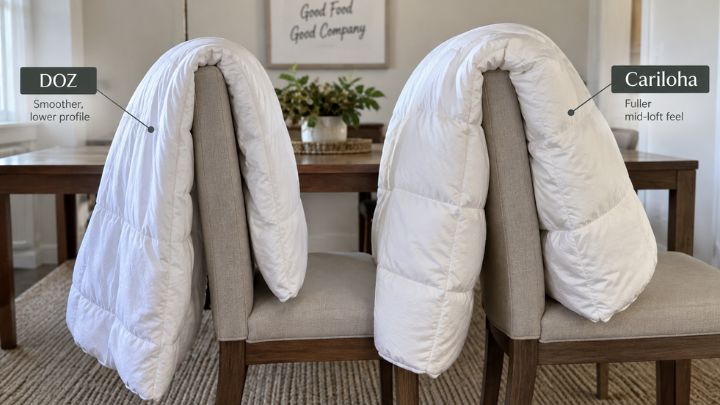
- My Take: I prefer a fuller comforter, which is why the Cariloha Mid-Loft leads my bamboo-comforter rankings. Its fill is mostly recycled polyester, showing why shell and fill should always be compared separately.
Bamboo vs. Down vs. Down Alternative at a Glance
| Feature | Bamboo-derived fill | Down | Down alternative |
|---|---|---|---|
| Typical feel | Smooth, drapey and lower profile | Airy, fluffy and lofty | Soft and fluffy; varies by fiber and construction |
| Warmth-to-weight | Usually moderate | Highest of the three | Usually needs more fill weight to approach down’s warmth |
| Loft | Low to medium | Medium to very high | Low to high |
| Animal material | No, unless combined with down or silk | Yes, from ducks or geese | Usually no |
| Common shell | Bamboo viscose | Cotton or down-proof fabric | Cotton, polyester or bamboo viscose |
| Care | Often spot clean or dry clean; some are washable | Product-specific; careful washing and complete drying | Many are machine washable, but check the label |
| Price | Midrange to premium | Usually premium | Budget to premium |
| Best match | Warm sleepers who like less puffiness | Sleepers who want lofty warmth with less weight | Shoppers avoiding down or prioritizing price and easy care |
These are category tendencies, not fixed rules. A lightweight down comforter can sleep cooler than a thick bamboo insert, and a premium down alternative can outlast a poorly made product in either category.
First, What Counts as a Bamboo Comforter?
A bamboo comforter may use bamboo-derived material in the shell, the fill or both.
The three bamboo comforters I own illustrate the range:
- Cariloha Mid-Loft: 100% bamboo-viscose shell; 20% viscose from bamboo and 80% recycled polyester fill
- Olive + Crate All Season: 100% bamboo-viscose shell; 40% bamboo fiber and 60% recycled microfiber fill
- DOZ All-Season: 100% bamboo-viscose shell; 55% bamboo viscose and 45% microfiber fill
All three have bamboo-derived shells. All three also contain synthetic material in the fill.
A comforter made with bamboo viscose in both layers will usually have a flatter, more fluid shape than a classic high-loft down insert. Cozy Earth, for example, offers a comforter with 100% bamboo viscose in its shell and fill and describes it as having a thinner profile and low loft.
My guide to what bamboo comforters are made of explains these labels in more detail.
What Is a Down Comforter?
Down is the soft undercoating beneath the outer feathers of ducks and geese. The clusters branch outward and trap air, creating insulation with relatively little material weight.
That three-dimensional structure gives down its familiar loft. A good down comforter can look generously puffed while feeling lighter over the body than a synthetic comforter with similar warmth.
Fill power
Fill power measures the volume occupied by one ounce of down in cubic inches. The American Down and Feather Council describes it as a measure of loft or insulating ability.
A higher fill-power number means the down provides more loft per ounce. It does not tell you the comforter’s total warmth on its own. The amount of down, size of the comforter, chamber construction and shell also matter.
This distinction is useful when comparing two down comforters. An 800-fill-power insert uses higher-loft down, while total warmth also depends on how much down the comforter contains.
Down is not the same as feathers
Down clusters do not have the firm quill found in an outer feather. Some lower-priced comforters blend down with feathers, which can add weight and occasionally produce a sharper feel through the shell.
Read the fill percentages rather than treating “down and feather” as another name for pure down.
What Is a Down-Alternative Comforter?
Down alternative describes fill designed to imitate the softness and loft of down without using down clusters.
Polyester and microfiber are the most common materials. Some alternatives incorporate recycled polyester, lyocell, cotton or other fibers.
The category is broad. One comforter may use a flat sheet of polyester batting, while another uses fine loose clusters engineered to spring back after compression. Both can be called down alternative, but they will not feel identical.
Down alternative often costs less than down and is available in more machine-washable designs. It also avoids duck and goose fill, making it the straightforward choice for vegan households.
The tradeoff is efficiency. Polyester generally needs more material weight to create the warmth and volume that high-quality down achieves with less fill.
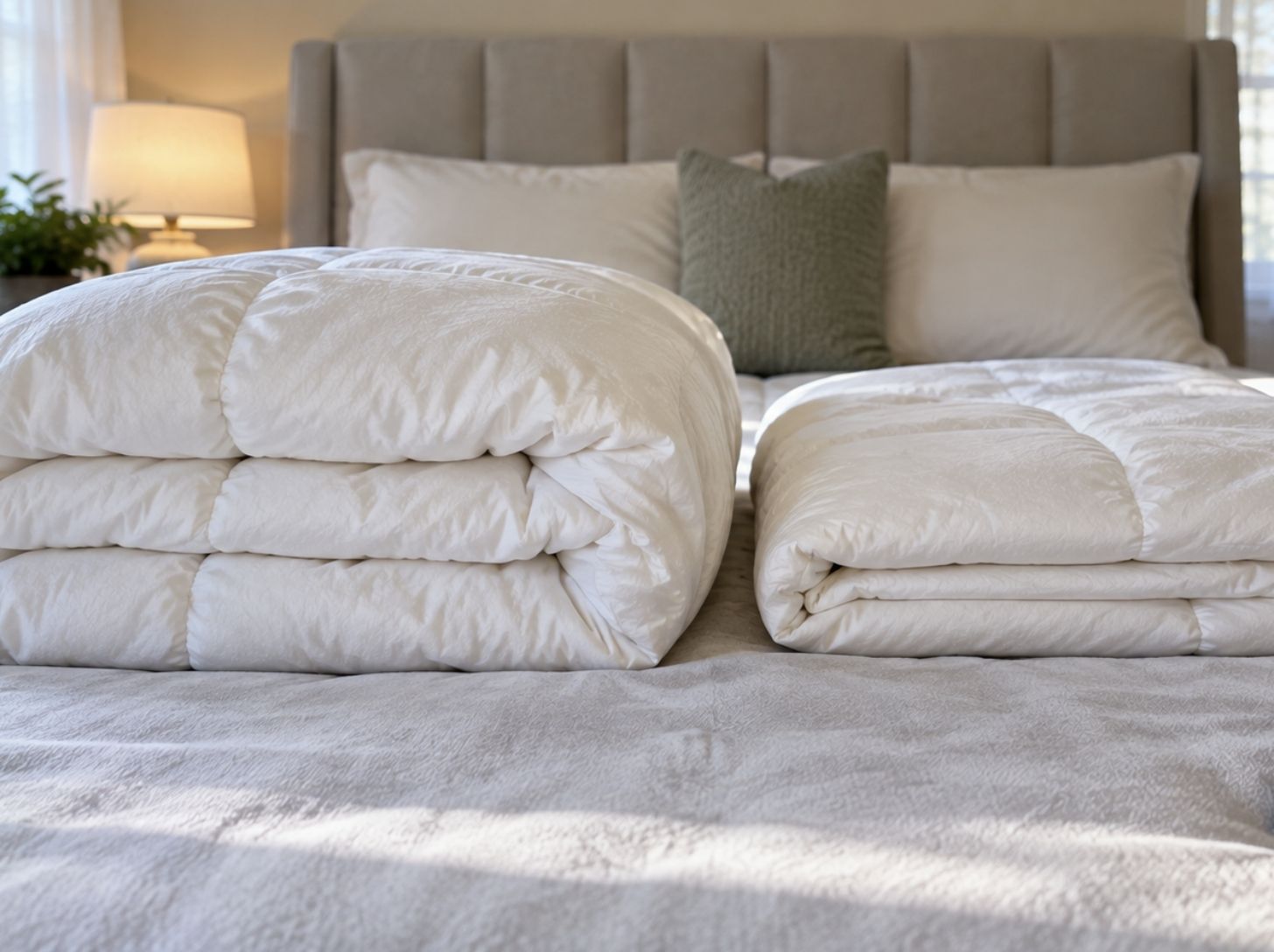
Which One Feels Fluffiest?
Down usually creates the highest loft for the least weight.
A high-quality down alternative can look almost as puffy, but it often feels heavier or denser. Bamboo-viscose fill tends to drape closer to the body and mattress rather than building a cloudlike silhouette.
My own preference sits between those extremes. I like visible loft, but I do not need the largest possible winter comforter. The Cariloha Mid-Loft works for me because its mostly recycled-polyester fill provides more fullness than the bamboo-heavier DOZ.
If you want the smoothest, flattest bed, bamboo-derived fill may be appealing. If the tall hotel-bed look is the priority, down or a cluster-style down alternative is the more likely match.
Which One Is Warmest?
Warmth depends on the finished comforter, not only the fill category.
Down has the best warmth-to-weight potential because its clusters trap a large amount of air. A winter-weight down insert can be very warm without pressing heavily against the body.
Down alternative can also be made for cold rooms, but it usually needs more fill to reach similar warmth. The extra material can make it feel heavier.
Bamboo-derived fill is commonly used in lightweight and all-season comforters. It suits sleepers who like a closer drape and less bulk, but heavyweight bamboo inserts are available too.
Compare the product’s weight designation, fill weight, TOG or GSM when provided. My comforter-weight guide for hot sleepers explains why those numbers are more useful than a cooling label by itself.
Which Is Best for Hot Sleepers?
I would choose by insulation level first.
A lightweight bamboo-filled comforter is a strong option for someone who dislikes loft and bulk. A lightweight down comforter can also work well because down provides insulation efficiently without requiring a heavy mass of fill.
Down alternative varies the most. A thin, well-constructed insert may be comfortable in a warm room, while a densely filled polyester comforter can trap more warmth than expected.
The shell and duvet cover contribute as well. A bamboo-viscose cover can feel smooth and light, but it cannot turn a heavyweight insert into summer bedding.
Which Is Heaviest on the Body?
For similar warmth, down is generally the lightest. Down alternative often feels heavier because more synthetic fill is needed. Bamboo-filled comforters commonly have a flatter, gently weighted drape rather than a springy loft.
Personal preference matters here. Some sleepers find a little weight calming. Others feel trapped beneath a dense comforter even when the room is cool.
The product’s total weight is the most useful number when available. GSM describes fill mass per square meter, not the complete weight resting over you.
Which Is Easier to Wash?
Down alternative offers the largest selection of machine-washable comforters. Polyester fill can tolerate gentle washing in many products, although the label and washer capacity still decide the correct method.
Bamboo comforters vary. My Olive + Crate is machine washable, but my Cariloha Mid-Loft and DOZ All-Season are dry-clean-only. Cozy Earth’s bamboo-viscose comforter and ettitude’s bamboo comforter also call for spot cleaning or dry cleaning.
Down care depends on the shell and manufacturer. Some down comforters can be washed with down-safe detergent and dried thoroughly on low heat; others require professional care. Large sizes may need commercial equipment even when washing is allowed.
The Bamboo-Comfort washing guide walks through the label check, washer-capacity test and drying process.
Which Is Better for Allergies?
Down alternative avoids animal fill and is often the easiest option to wash regularly. That makes it a practical starting point for someone who knows feathers or down bother them.
Down itself is not the only possible issue. Dust mites, mold and accumulated allergens can affect any comforter, especially when it is difficult to wash or stored while damp.
Look at the complete setup:
- Your known sensitivities
- Whether the comforter can be cleaned often enough
- How tightly the shell contains the fill
- Whether you use a washable duvet cover or allergen barrier
- How completely the comforter dries
“Hypoallergenic” on a product page does not replace personal medical advice or the care instructions.
Animal Content and Sourcing
Down comes from ducks or geese. Shoppers who use animal products may want certification that tracks sourcing and prohibits practices such as live plucking and force feeding.
Down alternative is generally animal-free, but check the complete material list when vegan purchasing is important.
Bamboo-derived fill is plant sourced, yet a bamboo shell can surround down or silk. The word bamboo on the front of the package does not establish that the complete comforter is vegan.
Durability and Fill Movement
High-quality down can regain loft after compression with shaking and proper care. The clusters can migrate when the chambers are poorly designed or stitching opens, so baffle construction and a down-proof shell matter.
Down alternative may flatten as fibers bend, tangle or form dense areas. Loose cluster fills are often easier to redistribute than a damaged sheet of batting.
Bamboo-viscose fill can compress into a lower profile and requires careful drying when washing is allowed. Blending it with polyester can improve loft and recovery.
In every category, I inspect the seams, chamber size and edge finish. A premium fill cannot perform well after it has collected in one corner.
Price and Long-Term Cost
Down alternative usually has the lowest entry price. Bamboo comforters range from affordable blends to premium all-bamboo-viscose models. High-fill-power down commonly costs the most.
Purchase price is only one part of the cost. Also consider:
- Professional cleaning
- A properly sized duvet cover
- Laundromat fees for oversized machine-washable inserts
- Expected loss of loft
- Warranty coverage
- Whether the comforter works across several seasons
A washable down alternative may be the least expensive to own. A durable down comforter may justify a higher price over many years. A lighter bamboo comforter may save you from buying separate warm-weather bedding. The best value depends on how it fits your bedroom and care routine.
Which Comforter Should You Choose?
Choose a bamboo comforter when:
- You like a smooth, close drape
- You sleep warm and want a lower-loft option
- Bamboo-derived shell or fill matters to you
- You are willing to check shell and fill percentages separately
Choose down when:
- You want maximum loft with less weight
- You sleep cold or want a warm winter insert
- You are comfortable using an animal-derived fill
- You accept the higher price and care requirements
Choose down alternative when:
- You want to avoid animal down
- Machine-washable choices are a priority
- You want a lower starting price
- You enjoy a fluffy feel and do not mind a little more weight
Frequently Asked Questions
Is bamboo warmer than down?
Down generally provides more warmth for its weight. A thick bamboo comforter can still be warmer than a lightweight down insert, so compare the finished products rather than only their materials.
Is bamboo cooler than down alternative?
A lightweight bamboo-filled comforter will often feel less bulky than a thick polyester down alternative. Either category can be made in light or heavy versions, and the fill amount remains important.
Is down alternative always polyester?
No, but polyester and microfiber are the most common fills. Some alternatives blend recycled polyester with lyocell, cotton or other fibers.
Does a bamboo shell make a polyester comforter bamboo?
It makes it a comforter with a bamboo-derived shell and polyester fill. That complete description is more useful than forcing the product into only one category.
What is fill power?
Fill power measures how much volume one ounce of down occupies. Higher-quality down provides more loft and insulating potential per ounce. Fill power does not state the total amount of down inside the comforter.
Which type looks most like a luxury hotel comforter?
Down usually creates the tallest, airiest appearance. A cluster-style down alternative can produce a similar look at a lower price. Bamboo-viscose fill usually has a slimmer profile.
Final Answer
Choose bamboo for a smoother, lower-loft comforter; down for the most warmth and loft per ounce; or down alternative for an animal-free fill with a wider range of prices and washable options.
I prefer the fuller feel of the Cariloha Mid-Loft among the bamboo comforters I own. Its bamboo-viscose shell and mostly recycled-polyester fill also demonstrate why these categories overlap.
The best choice comes from the complete label and construction: shell, fill, weight, chamber design and care. Compare those details, then choose the comforter whose warmth and feel fit your bed.

Molly has personally tested bamboo sheets, towels, and home textiles in her own home since 2017. Every recommendation is based on at least 14 nights of real-world use, including fit, feel, construction, washing, and value. Meet Molly See how we test →